

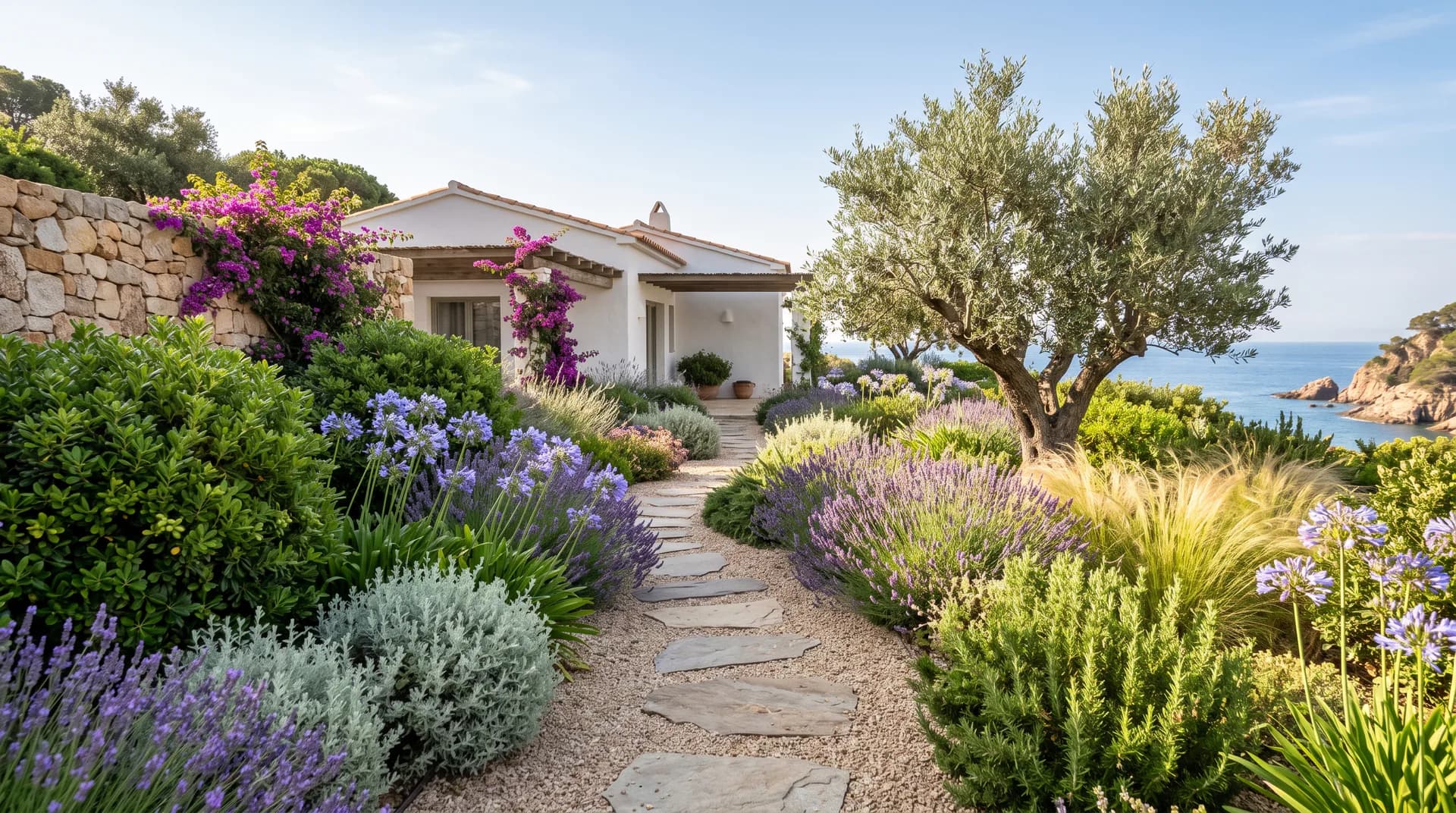
10 Ideal Plants for a Mediterranean Garden on the Costa Brava
Discover ten plants that can work particularly well in a Mediterranean-style garden.
Creating a garden suited to a Mediterranean climate does not mean giving up colour, flowers or an attractive outdoor space. Careful plant selection can simplify maintenance and help the garden respond to the particular conditions of each property.
1. Lavender
- Light
- Full sun.
- Water
- Moderate and well spaced once established.
- Maintenance
- Light trim after flowering; avoid old wood.
- Ideal for
- Borders, slopes and aromatic planting schemes.
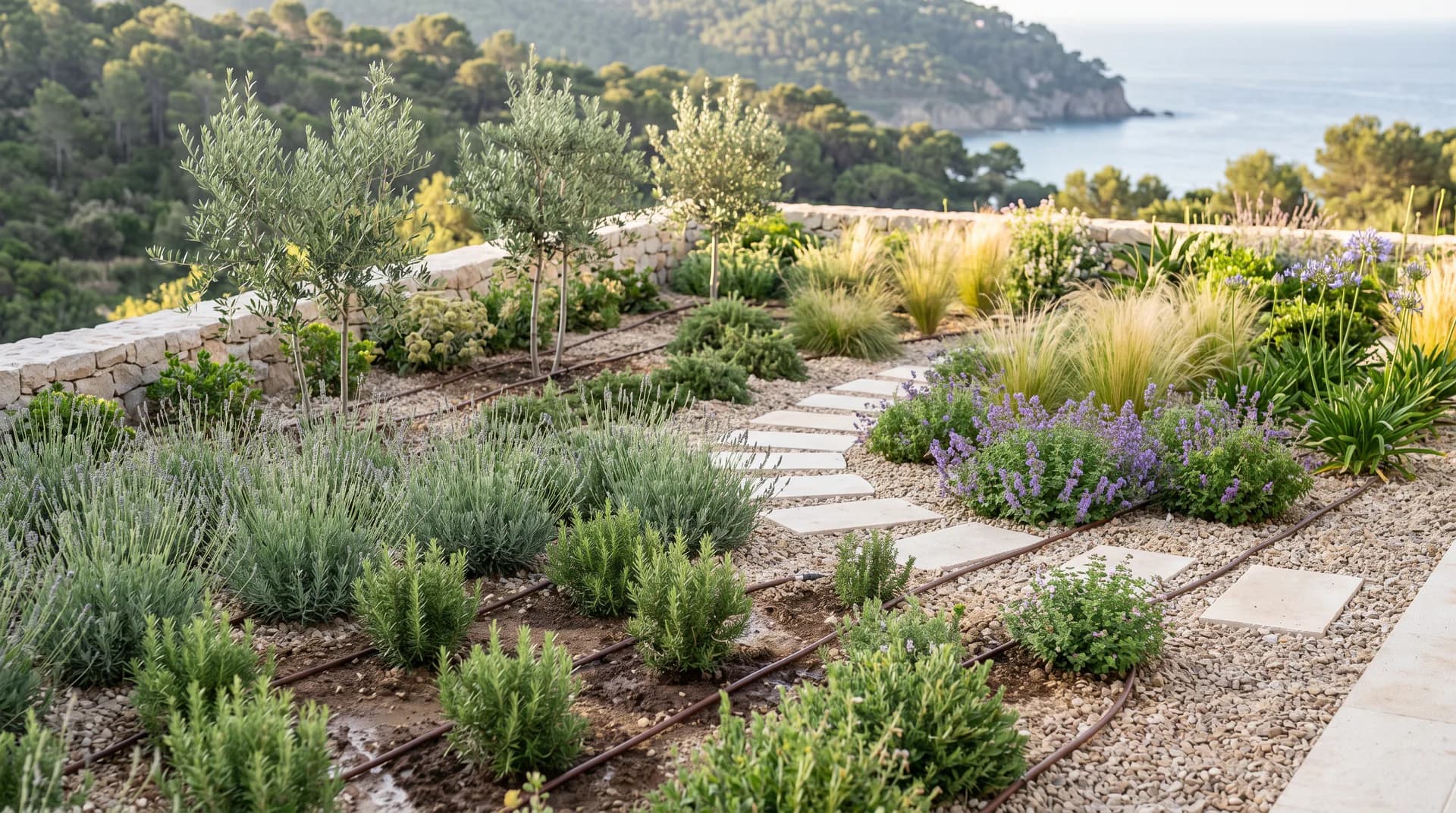
Lavender provides flowers, fragrance and a recognisably Mediterranean texture. It prefers free-draining soil and can suffer when its roots remain waterlogged. Near the sea, direct exposure to salt-laden wind should be considered. Varieties differ in size and performance, so available space, mature form and orientation should all guide the final choice.
2. Rosemary
- Light
- Sun or bright partial shade.
- Water
- Low to moderate, without waterlogging.
- Maintenance
- Gentle trimming to retain its form.
- Ideal for
- Low hedges, rock gardens and aromatic borders.
Rosemary combines ornamental value with scent and can be planted alone or in groups. It needs good drainage and enough room for its natural shape. Regular light trimming usually gives a better result than cutting hard into old woody growth. Prostrate varieties can work particularly well over walls and slopes when the location is suitable.
3. Olive tree
- Light
- Full sun.
- Water
- Moderate while establishing; later according to soil and purpose.
- Maintenance
- Selective pruning and growth management.
- Ideal for
- A focal point, larger patios and structured gardens.
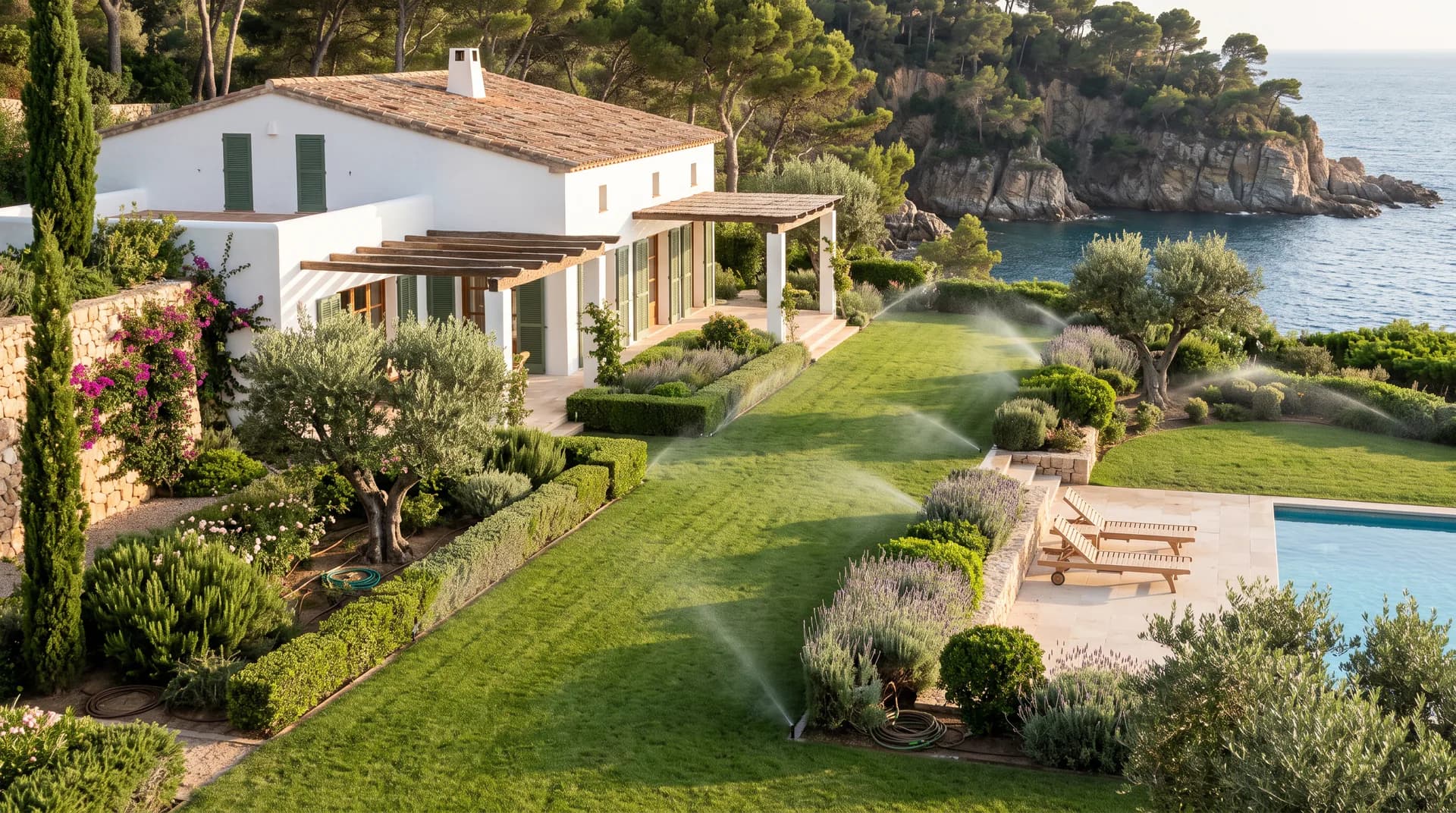
An olive tree brings year-round structure and sits naturally within Mediterranean planting. Although established trees tolerate dry periods, a newly planted specimen needs regular observation. Its mature volume, distance from paving and local drainage should be considered before planting. A restrained form can suit a smaller garden, provided realistic ongoing maintenance is planned.
4. Agapanthus
- Light
- Sun or partial shade.
- Water
- Regular during growth and flowering, without excess.
- Maintenance
- Remove spent flowers and dry leaves.
- Ideal for
- Edging, beds and entrance planting.
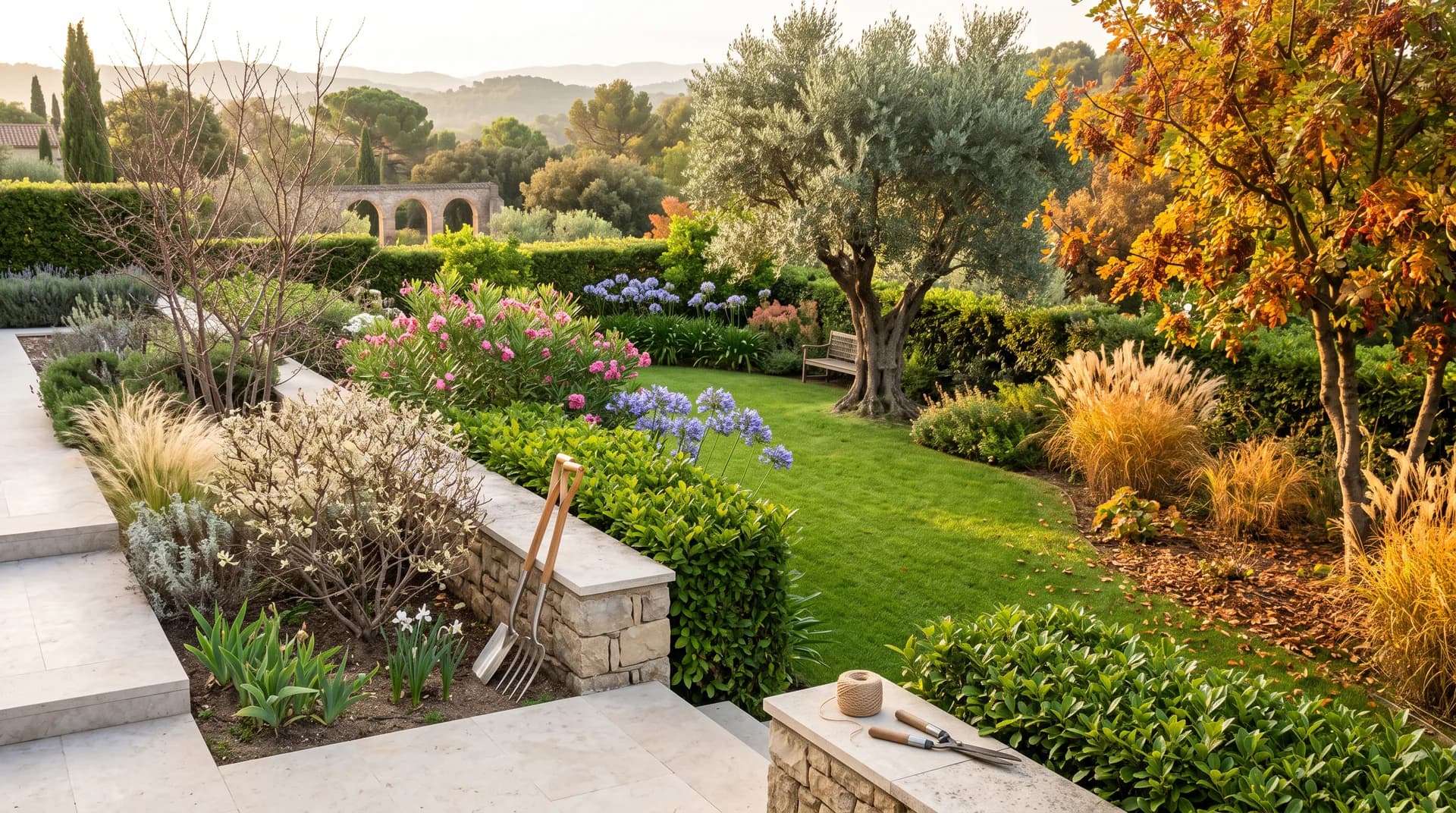
Agapanthus forms neat clumps of arching leaves and sends up tall blue or white flower heads. It creates ordered masses and combines well with shrubs and grasses. Performance varies with exposure and available moisture. Allow enough room for the clump to expand, and choose a variety with local cold, mature size and the wider garden design in mind.
5. Santolina
- Light
- Full sun.
- Water
- Low once established.
- Maintenance
- Light trimming to keep a compact shape.
- Ideal for
- Dry borders, rock gardens and foliage contrast.
Santolina is valued for its silver foliage and rounded habit. It performs best in sunny positions with soil that drains freely. Too much moisture can cause the plant to open up or weaken. A careful trim after flowering helps retain its shape without cutting far into old wood. Its soft colour contrasts attractively with green foliage and violet flowers.
6. Pittosporum
- Light
- Sun or partial shade, depending on the variety.
- Water
- Moderate and adapted to the soil.
- Maintenance
- Formative or hedge trimming when required.
- Ideal for
- Screening, hedges and the back of planting beds.
Pittosporums provide evergreen foliage, with varieties offering different sizes and colours. They can create privacy or a stable framework, but need enough space and trimming suited to the intended result. Some coastal positions suit them well, although performance depends on exposure, soil and cultivar. Choosing only by the plant's initial size often leads to unnecessary maintenance later.
7. Oleander
- Light
- Full sun for strong flowering.
- Water
- Moderate while establishing; adjust afterwards.
- Maintenance
- Selective pruning and safe disposal of cut material.
- Ideal for
- Flowering screens and carefully assessed larger spaces.
Oleander offers a long flowering period and tolerates Mediterranean conditions, but every part of the plant is toxic if ingested and its sap can irritate skin. It requires particular caution in gardens used by children or pets and should be handled with protection. Mature size, fallen flowers and its position in relation to paths must also be assessed before planting.
8. Bougainvillea
- Light
- Full sun in a sheltered position.
- Water
- Moderate, allowing the soil to drain.
- Maintenance
- Training, firm support and careful pruning.
- Ideal for
- Sunny walls, pergolas and sheltered courtyards.
Bougainvillea delivers intense colour and can cover structures, but needs sunshine and benefits from protection against cold and strong winds. Its thorns affect where it can safely be placed near paths. It requires reliable support and pruning that respects the intended framework. In exposed locations or areas prone to occasional frost, it may not be the most dependable choice.
9. Mediterranean ornamental grasses
- Light
- Usually sun, depending on the species.
- Water
- Variable; often low to moderate once established.
- Maintenance
- Annual cleaning or cutting according to species.
- Ideal for
- Movement, texture and transitions between beds.
Ornamental grasses bring lightness and movement, softening hard landscaping and complementing shrubs. Their needs and behaviour vary: some spread more readily, others retain a stronger shape, and certain species dry back seasonally. Selecting an appropriate species and understanding its mature size helps avoid invasive growth, constant cutting or a result that differs from the original design.
10. Agave
- Light
- Full sun.
- Water
- Low and carefully controlled.
- Maintenance
- Remove dry leaves using protective equipment.
- Ideal for
- Gravel, rock gardens and focal points away from paths.
Agave creates a strong sculptural form and requires excellent drainage. Many varieties have hard points and toothed leaves, so they should not be placed beside children's areas, narrow paths or play spaces. Mature size varies considerably and some species produce offsets. Safety, occasional cold, soil moisture and eventual dimensions should all be assessed before planting.
Choosing the right plants
The final selection depends on orientation, soil, wind exposure, proximity to the sea, available space, the design and whether children or pets use the garden. A Mediterranean species may suit one part of a property and be a poor choice for another.
Frequently asked questions
Do all Mediterranean plants need very little water?
No. Requirements vary by species, age, soil, exposure and establishment stage. Grouping compatible plants makes irrigation more precise.
What should be considered near the sea?
Wind exposure, salt, drainage and the specific microclimate all matter. Two nearby gardens can have very different conditions.