


How to Save Water in Your Garden Without Giving Up a Green Space
Practical ideas for managing water more carefully and designing a more efficient garden.
Managing water more carefully does not necessarily mean giving up an attractive garden. Efficiency starts with understanding each zone, correcting losses and designing with future maintenance in mind.
1. Divide the garden into zones
Grouping plants with similar needs allows frequency, duration and irrigation type to be adjusted without overwatering one species to compensate for another.
2. Use drip irrigation where appropriate
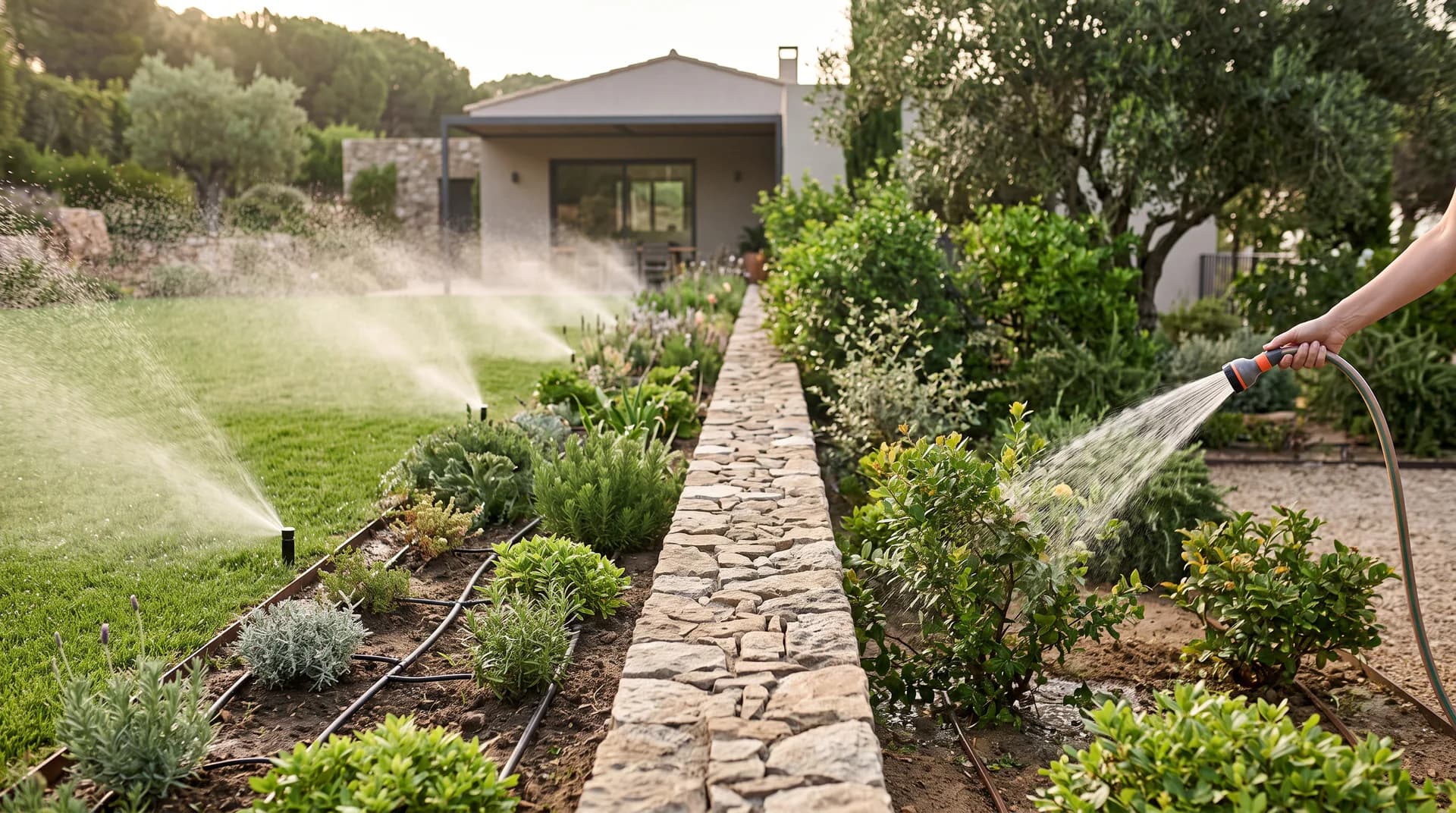
It can be a useful solution for shrubs, containers and planting lines. Design, flow rate and emitter maintenance remain important.
3. Adjust the programme
Do not leave exactly the same schedule running all year. Change times according to temperature, rainfall, growth and the soil's actual response.
4. Check for leaks
A small long-running leak can waste water and reduce pressure at other emitters. Inspect connections, visible pipes and unusually damp areas.
5. Check sprinklers
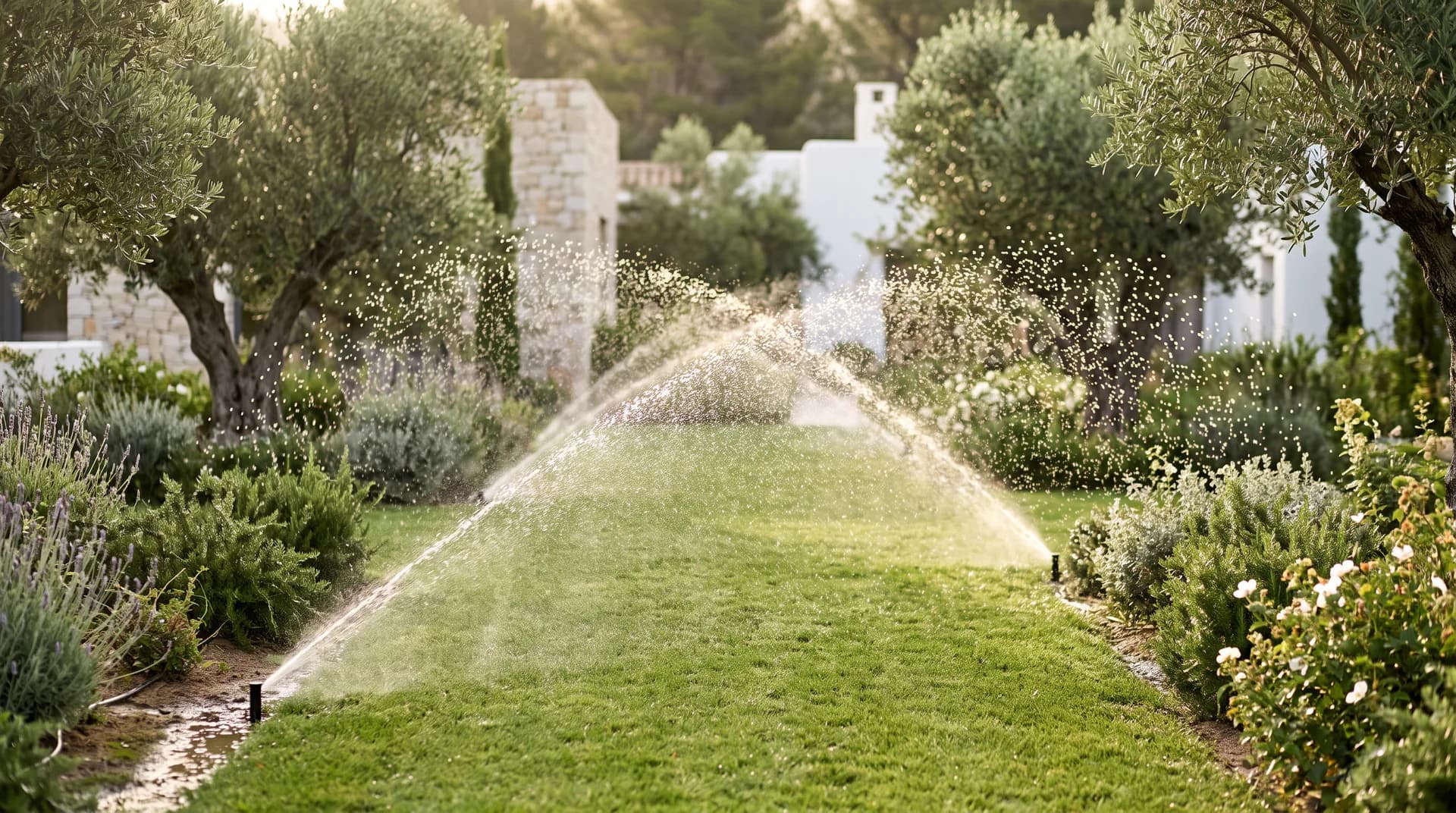
Correct blocked or misaligned nozzles and avoid watering paths, walls and other surfaces that do not need it.
6. Choose plants suited to the climate
A carefully planned Mediterranean palette may reduce water and maintenance needs in some areas. Suitability also depends on soil, wind and the specific microclimate.
7. Protect the soil
Suitable ground cover or mulch may help retain moisture and limit weeds. Material and depth should be appropriate for the plants and drainage.
8. Design for future maintenance
Efficiency starts when deciding how much lawn to use, where plants will go, how emitters can be accessed and which zones can share similar needs.
Frequently asked questions
Can drip irrigation be used everywhere?
Not necessarily. It suits many planting areas, whereas a lawn usually needs a different form of distribution. Choose the system zone by zone.
How can I spot a leak?
Look for wet connections, persistent puddles, pressure loss or irrigation outside scheduled times. Some buried leaks require a dedicated inspection.